
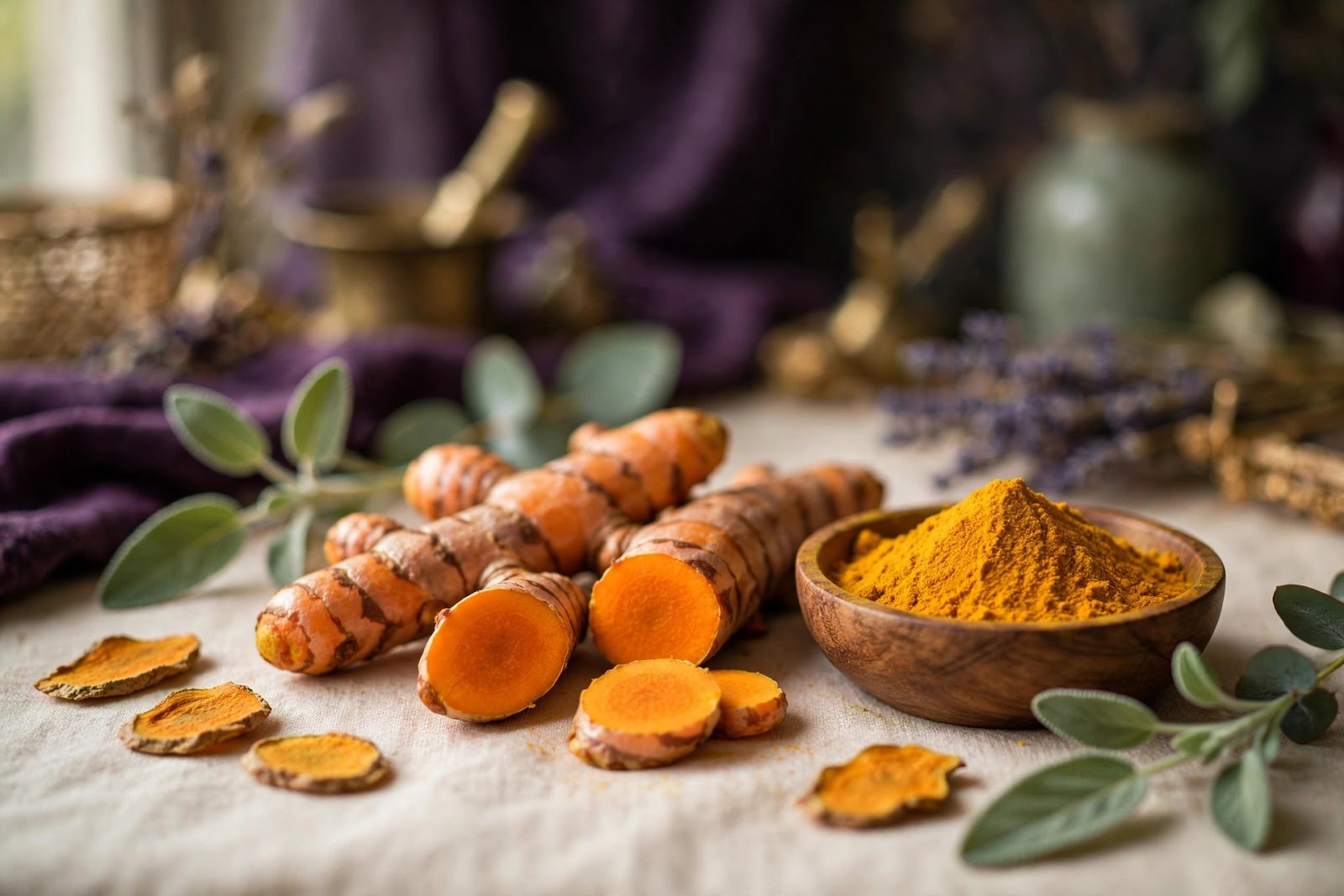
For over 4,000 years, turmeric has been one of the most revered healing plants on earth. In ancient India, it was called "the golden goddess" — a sacred root used in Ayurvedic medicine, religious ceremonies, and daily cooking long before anyone understood what made it work. Today, modern science has caught up with ancient wisdom, confirming what healers have known for millennia: turmeric is one of nature's most powerful medicines.
Ancient Roots: Ayurveda and Traditional Medicine
Turmeric (*Curcuma longa*) has been a cornerstone of Ayurvedic medicine for more than four millennia. Ancient Ayurvedic texts describe it as a powerful anti-inflammatory, a blood purifier, and a remedy for everything from skin conditions to digestive troubles. In traditional Indian culture, turmeric paste was applied to brides before their wedding day — a ritual called *haldi* — to give the skin a radiant glow and bless the marriage with health and prosperity.
In Traditional Chinese Medicine, turmeric (known as *jiang huang*) has been used for over 1,000 years to move stagnant blood, relieve pain, and support liver function. Practitioners prescribed it for chest pain, menstrual discomfort, and joint stiffness — conditions we now understand through the lens of inflammation.
And then there is golden milk — *haldi doodh* — the warm, soothing drink that has been a bedtime ritual in Indian households for centuries. Mothers stirred turmeric into warm milk with a pinch of black pepper and a spoonful of ghee, serving it to children with coughs, elders with achy joints, and anyone who needed comfort. This ancient recipe was, unknowingly, a masterclass in bioavailability — the black pepper and fat helping the body absorb turmeric's active compounds.
Modern Science: The Curcumin Connection
In the 20th century, researchers isolated turmeric's primary active compound: curcumin. This bright golden pigment is responsible for most of turmeric's therapeutic effects — and the research is extraordinary.
Over 15,000 peer-reviewed studies have examined curcumin's effects. What they have found reads like a wish list for a modern wellness supplement:
Anti-inflammatory power. Chronic inflammation is now recognized as a driver of nearly every major disease — heart disease, arthritis, diabetes, Alzheimer's, and certain cancers. Curcumin has been shown to inhibit NF-kB, a molecule that activates genes related to inflammation. In head-to-head comparisons, curcumin has matched the anti-inflammatory effectiveness of some pharmaceutical drugs, without the side effects.
Antioxidant protection. Curcumin is a potent antioxidant that neutralizes free radicals — unstable molecules that damage cells and accelerate aging. But it goes further: curcumin also boosts the body's own antioxidant enzymes, creating a two-layer defense system.
Brain health. Curcumin crosses the blood-brain barrier, a rare ability among natural compounds. Research suggests it may increase levels of brain-derived neurotrophic factor (BDNF), a growth hormone that supports the creation of new neurons and may help delay age-related brain changes.
Joint support. Multiple clinical trials have found curcumin effective for reducing joint pain and stiffness in people with osteoarthritis and rheumatoid arthritis — in some studies performing as well as common anti-inflammatory medications.
Digestive wellness. Traditional healers used turmeric for digestive complaints, and modern research supports this. Curcumin stimulates bile production, supports gut barrier integrity, and may help calm inflammatory bowel conditions.
The Bioavailability Puzzle — and How Ancient Wisdom Solved It
Here is the catch: curcumin on its own is poorly absorbed by the body. Studies show that only about 1% of curcumin consumed reaches the bloodstream. This is where ancient wisdom was ahead of modern science.
The traditional golden milk recipe — turmeric with black pepper and fat — solves this problem beautifully:
Black pepper contains piperine, which has been shown to increase curcumin absorption by up to 2,000%. A pinch is all it takes.
Healthy fat (ghee, coconut oil, or the fat in whole milk) helps dissolve curcumin, which is fat-soluble, making it easier for the body to absorb.
Modern supplement manufacturers have developed their own solutions — liposomal curcumin, curcumin-phospholipid complexes, and nanoparticle formulations. But the ancient recipe of turmeric, pepper, and fat remains one of the simplest and most effective delivery methods.
How to Use Turmeric in Daily Life
Golden Milk (Haldi Doodh)
This is the most beloved way to enjoy turmeric — warm, comforting, and deeply nourishing.
1 cup milk of your choice (dairy, coconut, almond, or oat)
1 teaspoon turmeric powder (or 1 inch fresh turmeric root, grated)
A pinch of black pepper (essential for absorption)
1 teaspoon coconut oil or ghee
1/2 teaspoon cinnamon (optional)
Honey or maple syrup to taste
Warm the milk gently — do not boil. Whisk in the turmeric, pepper, oil, and cinnamon. Simmer on low for 5 minutes, stirring occasionally. Strain if using fresh root. Sweeten to taste. Sip slowly, preferably in the evening as a wind-down ritual.
In Cooking
Turmeric is a staple in curries, soups, rice dishes, and roasted vegetables. Add it early in cooking with a little oil and black pepper to maximize absorption. A teaspoon in a pot of lentil soup, a pinch in scrambled eggs, or a grating of fresh root in a smoothie — all are simple ways to make turmeric part of your daily routine.
As a Tincture
A turmeric tincture concentrates the root's active compounds in alcohol, making it easy to add drops to water, tea, or juice. This is a convenient option for those who want consistent dosing without cooking.
Topically
Turmeric paste has been used for centuries to support skin health — calming irritation, reducing the appearance of blemishes, and promoting a radiant complexion. Mix turmeric powder with a little honey or aloe vera gel, apply to the skin for 10-15 minutes, and rinse. (Fair warning: turmeric stains — use an old towel and rinse thoroughly.)
Safety Notes
Turmeric is one of the safest medicinal plants known. It has been consumed daily by millions of people for thousands of years. However, a few cautions apply:
Cook your turmeric. Raw turmeric root is safe, but cooking or warming it improves absorption and reduces the risk of stomach upset.
Moderation with supplements. Culinary amounts of turmeric (up to 1-2 teaspoons per day) are safe for nearly everyone. High-dose curcumin supplements should be discussed with your healthcare provider, especially if you are pregnant, nursing, taking blood thinners, or managing gallbladder issues.
Staining. Turmeric will stain clothing, cutting boards, and countertops. Embrace the golden color — it is a sign of potency.
Not a replacement. Turmeric is a powerful wellness ally, but it is not a substitute for medical care. If you are managing a health condition, work with your healthcare provider.
The Golden Thread
From the ancient Ayurvedic texts to the modern laboratory, turmeric has carried a golden thread of healing through human history. The healers who first ground this root into paste, stirred it into milk, and applied it to skin did not know about curcumin or NF-kB or bioavailability. They knew what worked — through observation, tradition, and wisdom passed down through generations.
Modern science has not replaced that wisdom. It has confirmed it, explained it, and deepened our understanding of why it works. That is the beauty of herbal medicine: ancient wisdom and modern formulation, working together.
Turmeric is not a trend. It is a tradition — one that has been healing bodies for 4,000 years and will continue for 4,000 more.
*Ready to bring golden medicine into your daily ritual? Explore our turmeric products — from warming body butters to potent tinctures — each crafted with the same reverence for ancient wisdom that has guided healers for millennia.*
These statements have not been evaluated by the Food and Drug Administration. This product is not intended to diagnose, treat, cure, or prevent any disease.