
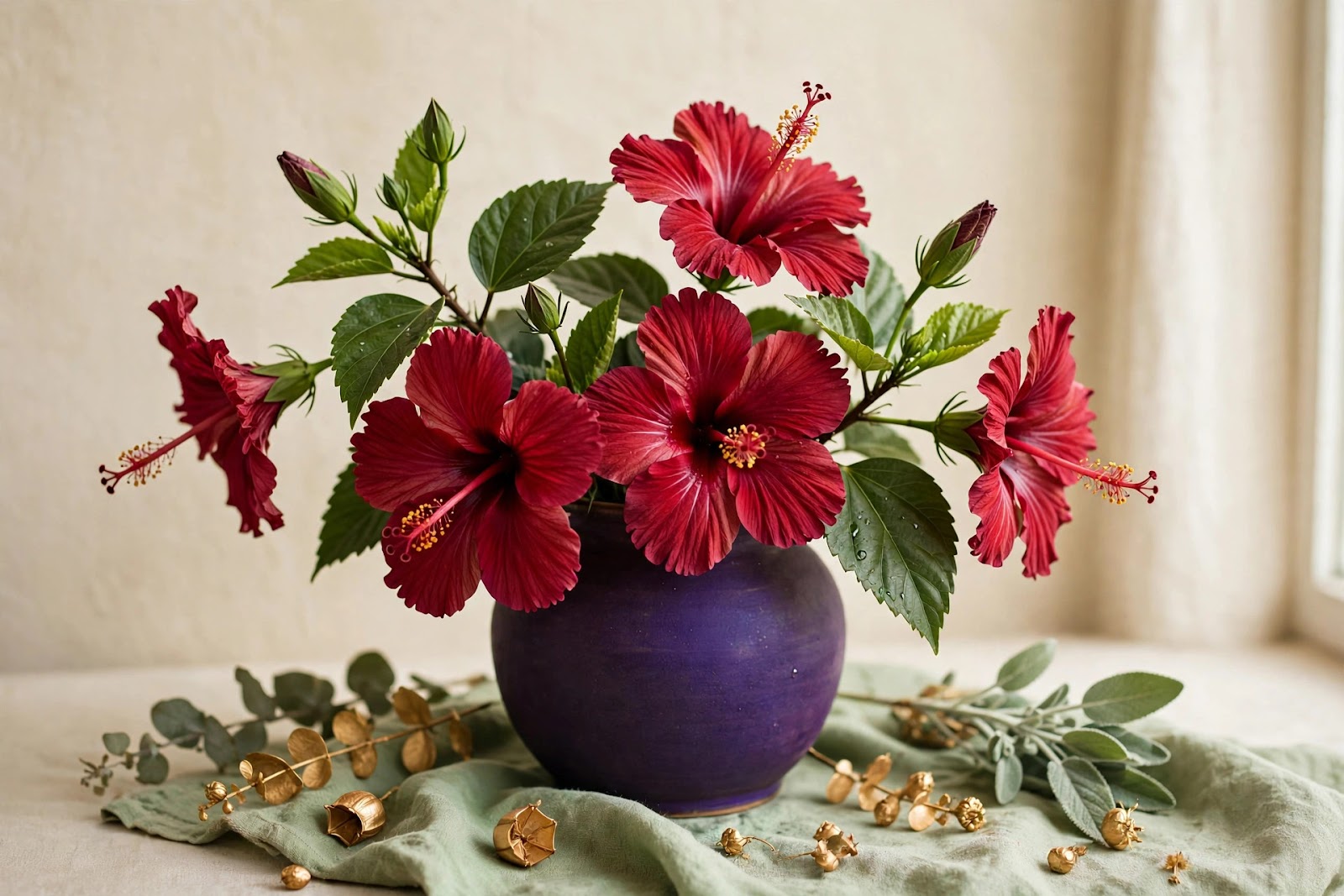
There is a tea that stops people mid-sip. They look down at the cup, then back up at me, and say the same thing every time: "What IS that color?" Deep ruby-red, almost glowing, tart on the tongue and somehow comforting all at once. That is hibiscus, loves — and if you have never made friends with this flower, October is the perfect month to start.
Hibiscus has been one of my favorite fall herbs for years. Let me tell you why it belongs in your apothecary this season.
The Ruby-Red Flower of the Fall Apothecary
The hibiscus we brew is Hibiscus sabdariffa, and the part we use is the calyx — the fleshy, deep-crimson cup that holds the flower. Dried, those calyces look like crumpled velvet petals, dark red and a little glossy. Drop them in hot water and they give you one of the most beautiful cups in all of herbalism.
Hibiscus has traveled the world, and everywhere it goes, people make a ritual of it. In Egypt, it is karkadeh, served hot in winter and iced in summer. Across the Caribbean, it is sorrel, simmered with ginger and spice for the holidays. In Mexico, it is agua de jamaica, the ruby-red agua fresca on every market table. Different names, different kitchens, same deep-red cup — and the same instinct: when life needs slowing down, reach for the red flower.
For me, hibiscus is the bridge herb of October. It is bright enough to remind you of summer, grounding enough to carry you into the cold months, and tart enough to wake your senses up when the gray days start creeping in.
My Hibiscus Tea Ritual
This is one of the simplest rituals in my whole apothecary, and a favorite on a slow October afternoon.
I take a spoonful of dried hibiscus calyces and put them in my favorite mug. Pour hot water over them, cover the cup, and steep five minutes. That is it. When I lift the cover, the steam smells tart and floral, like cranberries met roses — and the color, loves, the color is unreal.
I like mine with a squeeze of lemon, which brightens the tartness and turns the cup an even deeper ruby. If you want it softer, stir in a little honey while it is still warm. Then hold the cup with both hands and take that first breath before you sip. It is my signal to slow down: afternoon pages, a few deep breaths, and this ruby-red cup.
A little honesty: hibiscus is tart. If you have only ever drunk sweet teas, your first sip might surprise you. Give it three sips. Most people fall in love by the third.
The Golden-Hour Skin Ritual
Here is a second way I work with hibiscus — a slow, simple skin ritual for dry fall evenings.
After my tea has cooled to lukewarm, I save the last few spoonfuls. I soak a soft cloth in the cooled tea, wring it out, and press it gently over my face and neck for a minute or two, breathing slow. Then I rinse with cool water and follow with my usual evening butter. It is cooling, refreshing, and it feels like a tiny spa ritual made from a teacup.
Keep it gentle, loves: cooled tea only, never hot, and if your skin is sensitive, test a small spot first. This is a folk ritual, not a treatment — the point is the pause, the care, the few minutes you give yourself.
A Few Practical Tips
Buy whole calyces, not powder. Whole dried hibiscus calyces hold their color and flavor best. Look for deep, dark red — if they are brownish or faded, they have been sitting too long.
Start small. If you have never worked with hibiscus before, start with the tea. One spoonful, five minutes, see how it makes you feel. Your ritual will grow from there.
Store it right. Keep your dried hibiscus in a dark jar away from heat and light, and it will stay bright for months. A clear jar on a sunny shelf will fade it fast.
Your October Ritual Invitation
Here is what I want you to try this week. Pick an afternoon — today if you can — and make yourself a cup of hibiscus tea. Steep it covered for five minutes. Add lemon if you like it bright. Then sit somewhere you can watch the light change, and just be still for a few minutes with that ruby-red cup in your hands.
That is the whole ritual. No complicated steps, no expensive supplies — just you, a spoonful of crimson petals, and the October light doing its beautiful thing.
And if this little ritual wakes something up in you — that pull toward the plants, toward making your own remedies and rhythms — then there is a deeper resource waiting for you. Herbal Remedies Guide is where I gather everything I have learned: the herbs, the recipes, the rituals, the whole kitchen apothecary, in one place. Consider it your next step when you are ready.