
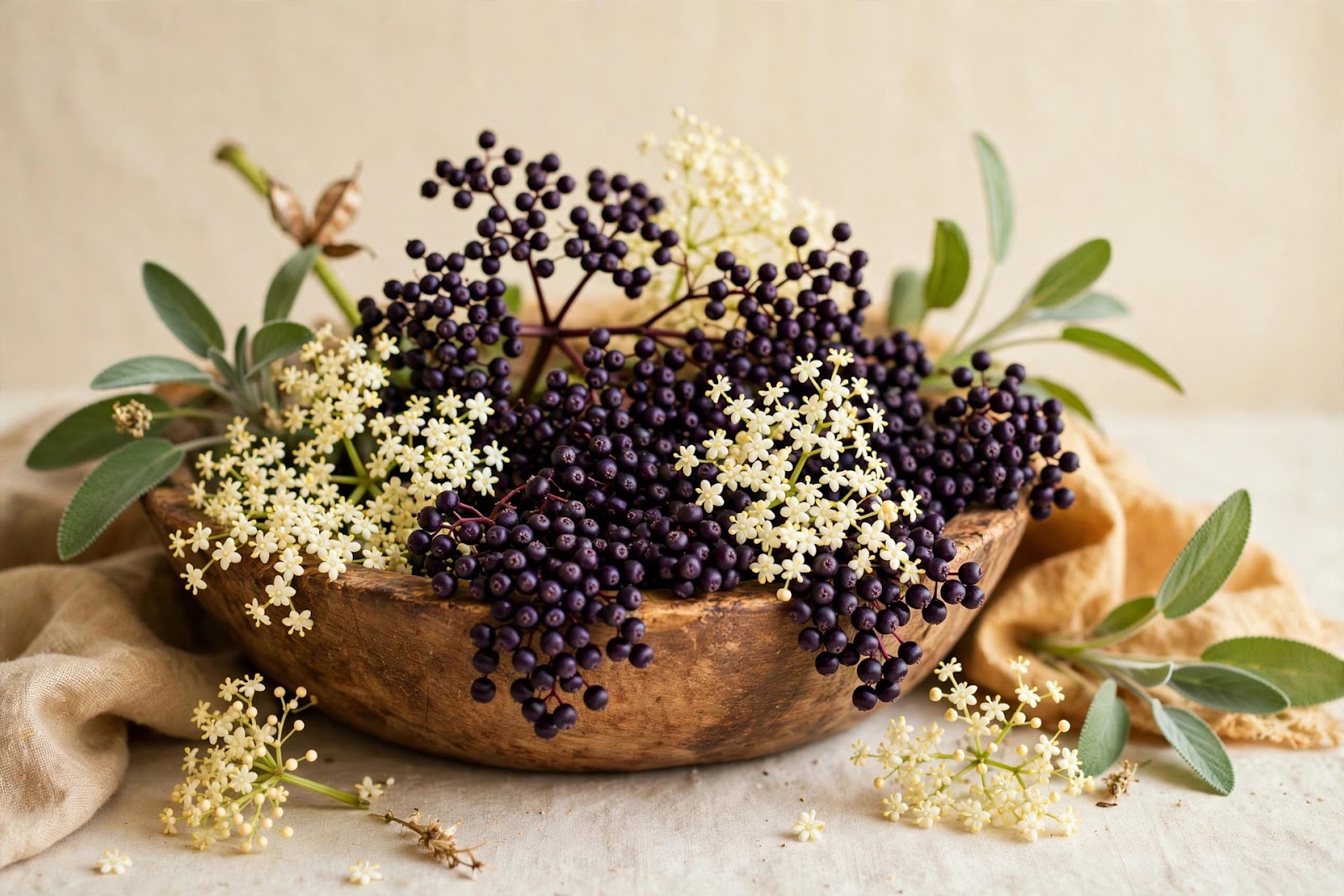
Elderberry: The Berry Behind the Fall Ritual
There is a moment every October when the light turns golden and the air gets that crisp edge — and my apothecary shelf tells me it is elderberry season. These tiny, near-black berries have been gathered, simmered, and sipped for centuries, long before wellness was a word anyone used. If your fall routine is missing a deep, grounding ritual, elderberry is the berry to meet.
Why Herbalists Reach for Elderberry in the Fall
Elderberry comes from the elder tree, and traditional herbalists have prized both its berries and its flowers for generations. The berries are rich, dark, and full of character — the kind of plant that feels like it was made for cozy season. Folk tradition holds elderberry as a staple of the autumn apothecary, the berry you simmer when the days get short and you want your kitchen to smell like someone cares.
What I love most is the ritual of it. Elderberry asks you to slow down. You cannot rush a good elderberry simmer — and honestly, that is the point.
The Classic Elderberry Simmer
My favorite way to work with elderberry is the traditional stovetop simmer. It is simple, it fills your whole home with warmth, and it gives you a beautiful deep-ruby base you can enjoy all week.
What you need:
Dried elderberries, water, a little cinnamon or ginger if you like, and raw honey to finish. That is it — the berry does the heavy lifting.
How I make it:
Add a generous handful of dried elderberries to a pot with several cups of water. Bring it to a gentle boil, then lower the heat and let it simmer low for about 30 to 45 minutes, until the liquid reduces and turns a gorgeous deep purple-red. Strain out the berries, let the liquid cool until it is just warm, and stir in honey to taste. Keep it in a glass jar in the fridge and warm up a small cup whenever you want a cozy moment.
Elderflower: Don't Skip the Blossoms
Before the berries come the flowers — delicate, creamy-white elderflower clusters that make one of the loveliest light teas you will ever taste. Elderflower tea is floral, gentle, and perfect for a slow afternoon. If you ever see dried elderflowers at an herb shop, bring them home. Steep a spoonful in hot water for five minutes, covered, and sip it like the soft luxury it is.
A Few Things Worth Knowing
Always cook the berries. This is the golden rule of elderberry: raw elderberries are not for snacking. Simmering or cooking is the traditional preparation, and it is also what makes them taste their best.
Strain well. A fine mesh strainer or cheesecloth gives you a smooth, beautiful syrup base without the bits.
Honey goes in last. Let your simmer cool to warm — not hot — before stirring in raw honey, so you keep all of its goodness intact.
Making It Your October Ritual
Here is my suggestion: pick one evening this week and make the simmer your whole event. Put on music, light a candle, and let the pot do its slow work while you do yours — journaling, resting, or just sitting still. When it is done, pour yourself a warm cup, and notice how different it feels to drink something you made with your own hands.
That is what herbalism really is. Not a product — a practice. And elderberry, with its deep color and deeper tradition, is one of the finest teachers of it.
Want to go deeper? My book, The Herbal Remedies Guide, walks through elderberry and dozens of other herbs with traditional preparations, seasonal rituals, and the kind of plant wisdom you can actually use. Keep it on your shelf and reach for it whenever the season changes.